Why Your Roof Choice Matters More in Alberta Than Almost Anywhere Else
Alberta homeowners face a roofing environment that tests materials hard. Central Alberta sits in one of Canada's most active hail corridors — the stretch from Calgary northeast through Red Deer and Lacombe sees hailstorms capable of stripping granules from asphalt shingles in a single event. Add freeze-thaw cycles that repeat dozens of times each winter, spring snowmelt loads that can sit on a low-pitch roof for days, and summer UV exposure at elevation, and you have conditions that accelerate the aging of any roofing material.
When it is time to re-roof, Central Alberta homeowners increasingly face the same choice: replace like-for-like with asphalt shingles again, or step up to a steel roofing system. This comparison walks through both options honestly — performance, lifespan, noise, cost framing, and the situations where each genuinely makes sense. After two decades of finishing and re-roofing homes across Central Alberta, it is the same straight comparison we give homeowners at the kitchen table.
Lifespan: The Most Important Number in This Conversation
Steel roofing installed correctly with quality underlayment and flashing has a typical lifespan of 40 to 70 years. Architectural asphalt shingles — the premium end of the shingle market — carry manufacturer warranties in the 30-year range, but real-world performance in Alberta's climate typically lands in the 15-to-25-year window. Standard three-tab shingles underperform even that.
The gap is not subtle. A homeowner who installs steel roofing on a house in their forties may never re-roof again. A homeowner who installs asphalt shingles will likely re-roof the house two or three times over the same period. That replacement cycle is where the true lifetime cost of asphalt accumulates — not just in materials and labour each time, but in the disruption, the disposal fees, and the risk that each replacement is done under less-than-ideal conditions (rushed timelines, contractor availability, material shortages).
Alberta's Hail Corridor and the Class 4 Impact Rating
If you live in Central Alberta, hail is not a hypothetical — it is a recurring maintenance event. The question for your roof is not whether it will be hit, but how well it will hold up when it is.
The industry benchmark for impact resistance is the UL 2218 standard, which rates products from Class 1 (lowest) to Class 4 (highest). Class 4 is the top rating — products at this level are tested against two-inch steel balls dropped from specified heights without cracking or splitting. Steel roofing panels achieve Class 4 (UL 2218) impact resistance, the highest available rating.
Standard asphalt shingles typically rate Class 1 or Class 2. Impact-resistant asphalt shingles — a premium product designed specifically for hail-prone markets — can achieve Class 4 certification, but they come at a significant cost premium over standard shingles, narrowing the price gap between top-tier asphalt and steel. They also still have the shorter lifespan common to all asphalt products.
Beyond impact resistance, many insurers in Alberta offer premium discounts for Class 4 rated roofing materials. The discount varies by insurer and policy, but it is worth asking your provider directly before you make a final decision. Over decades of coverage, those savings can be meaningful.
Snow, Ice, and Winter Load Performance
Steel roofing has a smooth, hard surface that sheds snow more readily than the textured, granule-coated surface of asphalt shingles. On a pitched roof, this means snow loads release sooner and more completely, reducing the structural load on your trusses during extended cold periods.
Ice damming — the buildup of ice at the eaves that can force meltwater back under a roof — is a risk with any roofing material. Steel does not inherently prevent ice dams, but proper underlayment selection and adequate attic insulation and ventilation are the primary defenses regardless of what sits on top. A correctly installed steel roof with the right underlayment system will perform at least as well as quality asphalt in ice-dam conditions, and the hard surface resists the cracking and granule loss that repeated ice cycles inflict on asphalt.
On lower-pitch roofs, the same snow-shedding characteristic means avalanche-style snow slides can occur without warning — a consideration for entryways, walkways, and landscaping below the eaves. Snow retention systems (bars or rails anchored to the roof) are the standard solution and are commonly specified on steel roof installations in Central Alberta.
Fade, Finish, and Long-Term Appearance
Asphalt shingles age visibly. Granule loss starts almost immediately — you will see it in your gutters after the first few years. As granules wear away, the mat underneath begins to absorb UV, the shingle becomes more brittle, and colour fading accelerates. By year 15 in Alberta's UV environment, most asphalt roofs look noticeably older than they did when installed.
Premium steel roofing uses PVDF (polyvinylidene fluoride) finishes — often branded as Kynar 500 — applied over the steel substrate at the factory. PVDF is a fluoropolymer coating originally developed for industrial applications where UV resistance and colour stability are critical. In residential roofing, PVDF finishes carry fade and chalk warranties of 30 to 40 years. The colour you choose on installation day will remain essentially the same decades later.
This is not just an aesthetic point. A roof that maintains its appearance for 40 years contributes to consistent curb appeal and resale value over the entire ownership period. A roof that looks aged and granule-stripped at year 18 signals deferred maintenance to buyers and appraisers — even if it technically has a few years of service life remaining.
The Noise Question: Addressing the Most Common Concern
The most common objection to steel roofing is the noise question: will rain on a metal roof be loud? It is a fair concern, and it deserves a direct answer rather than a dismissal.
The short answer is: installed correctly over a solid deck with appropriate underlayment, a steel roof is not meaningfully louder than asphalt inside a well-insulated home. The image of a noisy metal roof comes from pole barns and agricultural buildings — structures with open framing, no insulation, and no decking between the steel and the interior. In those buildings, rain is loud. They are built entirely differently from a residential roof assembly.
A residential steel roof installation includes solid OSB or plywood decking, an acoustic underlayment layer, and then the steel panels above. The insulation in your attic does the rest. Most homeowners report that after the first few rain events, they stop noticing any difference at all. The occasional hailstorm is the one scenario where steel is more audible than asphalt — but that is also the scenario where you want to be on steel rather than watching granules wash into your gutters.
Lifetime Cost: Replacing Asphalt Two or Three Times vs Installing Steel Once
A steel roof costs more upfront than an asphalt shingle job. That is true, and anyone claiming otherwise is not being straight with you. The relevant question is not the upfront cost in isolation — it is the total cost over the life of the home.
Consider the full picture for a home that will be owned for 40 or more years. Asphalt shingles in Alberta's climate will likely need replacement at least twice in that window, possibly three times depending on hail events and the quality of the original installation. Each replacement involves tear-off of the old material, disposal, new materials, and full labour. The cumulative cost of two or three asphalt re-roofs over 40 years typically exceeds the cost of one quality steel roof installed once.
Steel also has essentially no ongoing maintenance cost beyond annual inspections of flashing and penetrations — the same maintenance you should be doing on any roof. There is no repainting, no granule loss to monitor, no mid-life crack sealing. The roof simply performs.
For homeowners who are certain they will sell within five to ten years, the calculus shifts. You are unlikely to recover the full upfront premium of steel in a short-horizon sale, though it does differentiate your home and can be a selling point in Alberta's hail-aware market. In that scenario, quality architectural shingles with a Class 4 impact rating may make more practical sense — we address that below.
Resale Value and Curb Appeal
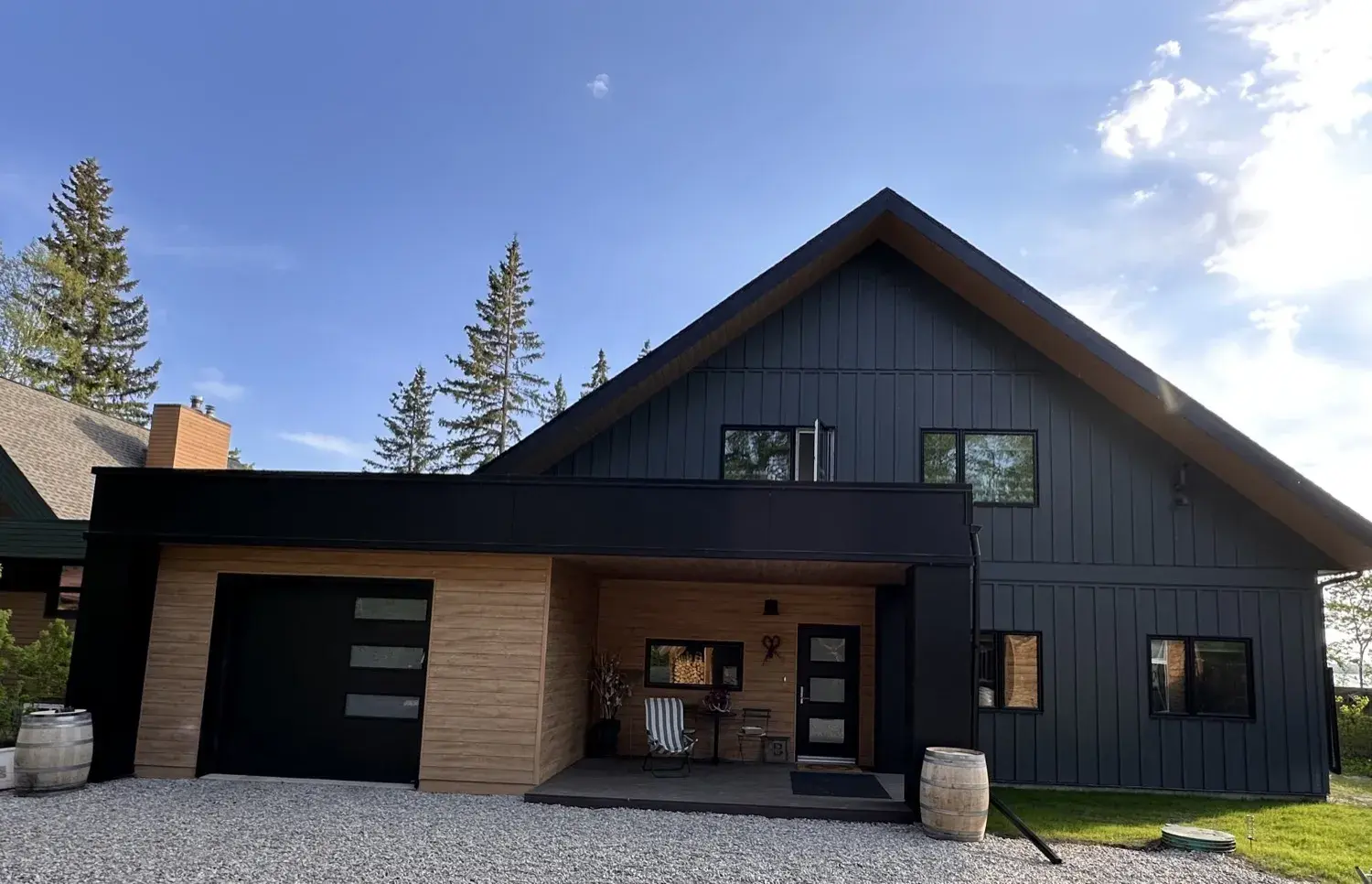
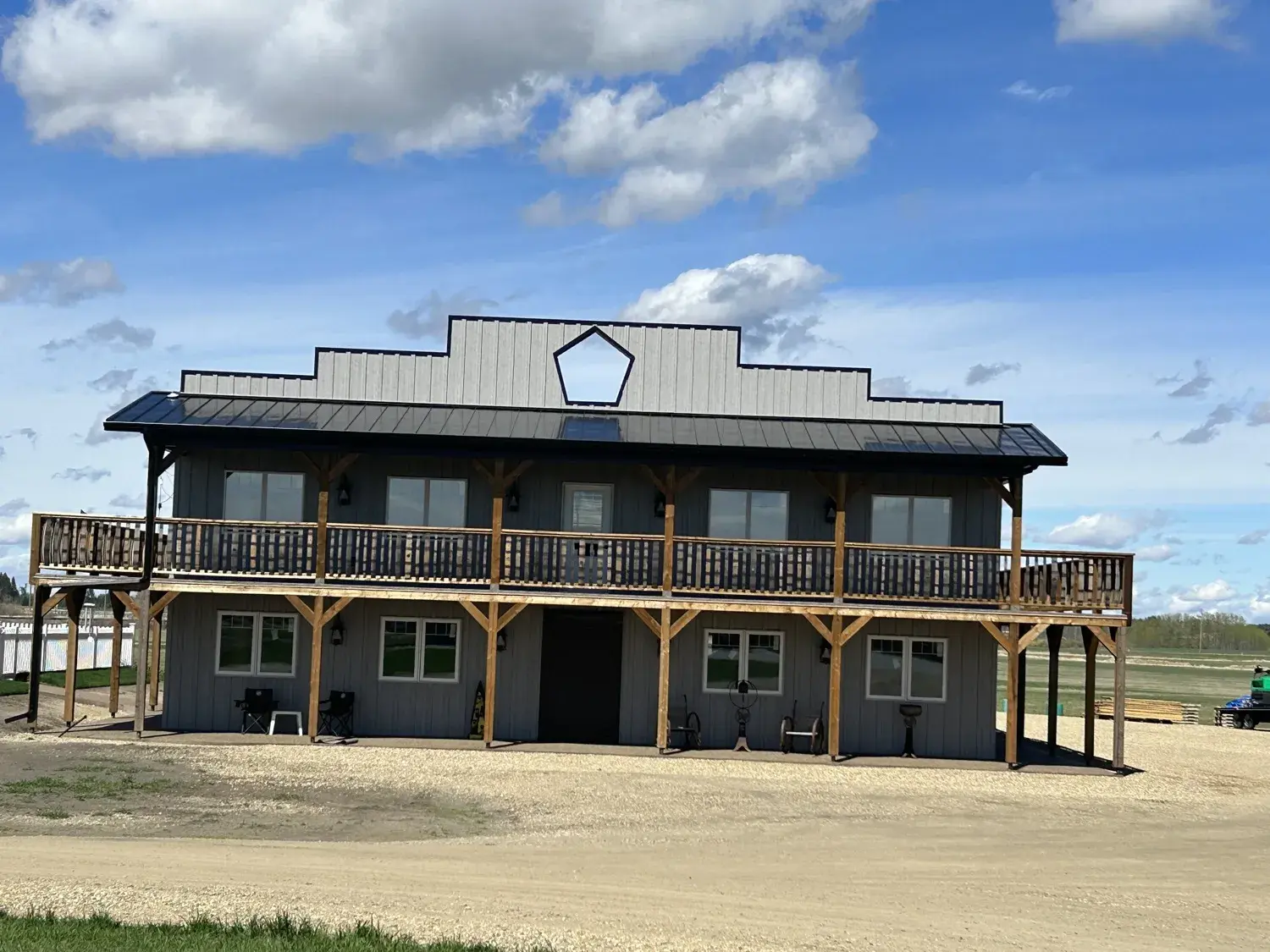
Steel roofing has moved well beyond the corrugated agricultural look of a generation ago. Modern residential steel roofing profiles — standing seam, concealed-fastener steel shingles, and board-and-batten-style panels — are visually sophisticated and read as a premium upgrade to buyers.
In Alberta's real estate market, where hail is a known recurring cost, buyers and their inspectors pay attention to roofing material and age. A steel roof with a documented Class 4 rating and decades of remaining service life is a genuine asset in a listing. It removes one of the largest potential capital expenditures from the buyer's near-term maintenance list, which has real value in negotiation.
The Red Deer and Central Alberta market has seen growing demand for steel roofing on both new construction and re-roofing projects, in part because buyers have lived through enough hail events to understand the value proposition.
When Asphalt Still Makes Sense
This comparison would not be balanced without acknowledging the situations where asphalt shingles remain a reasonable choice.
If your primary constraint is upfront budget, asphalt shingles allow you to address a failing or damaged roof now without the larger initial investment of steel. A sound asphalt roof that performs for 20 years while your financial situation evolves is better than delaying necessary repairs. Exterior repairs done promptly always beat deferred maintenance.
If you are planning to sell within five years and your neighbourhood's comparable homes have asphalt roofs, the premium for steel may not be recoverable in your specific market. In that scenario, quality architectural shingles keep you competitive without over-investing relative to your hold period.
And if your home has a complex roofline — many valleys, dormers, skylights, and multiple penetrations — the additional detailing required for a high-quality steel installation increases the labour component significantly. That does not make steel the wrong choice, but it does make the project more involved, and it raises the importance of working with an installer who has experience with complex roof geometries rather than simply large flat runs of panels.
What to Ask Before You Decide
- How long do you plan to stay in the home? The longer the horizon, the more steel's lifetime cost advantage compounds.
- What is your insurance situation? Ask your insurer specifically about Class 4 discounts — some are substantial.
- Has your current roof been hail-damaged? An insurance claim may offset a meaningful portion of the re-roofing cost regardless of material choice.
- What is the pitch of your roof? Very low-pitch roofs have specific underlayment requirements for steel that add to the project scope.
- Are there walkways or landscaping below your eaves that would be at risk from snow slides? If so, snow retention systems need to be factored into the project from the start.
The Bottom Line for Central Alberta Homeowners
Steel roofing is the stronger long-term choice for most Alberta homeowners who plan to stay in their homes. The combination of a 40-to-70-year lifespan, Class 4 (UL 2218) hail resistance, PVDF finishes warranted 30 to 40 years against fade, and the elimination of repeat re-roofing costs makes the upfront investment worth serious consideration — particularly in Central Alberta's hail corridor, where asphalt takes a real beating.
Asphalt is not a bad product. For homeowners with tighter upfront budgets or shorter ownership horizons, quality architectural shingles remain a credible choice. The mistake is treating both options as equivalent over a 30-or-40-year ownership period — they are not.
If you are weighing the decision for a Red Deer or Central Alberta property, PJM Home Advantage installs steel roofing systems with the underlayment, flashing, and snow management details that Alberta's climate demands. We will walk you through both options honestly, size the project to your specific roof geometry, and give you a clear picture of what each choice looks like over the life of your home. Request a free quote and let us help you make the right call for your situation.
PJM Home Advantage
Exterior Finishing Specialists
PJM Home Advantage has been finishing exteriors across Red Deer and Central Alberta for over 20 years. Our team specializes in siding, soffit, fascia, eavestrough, steel roofing, and Wizard motorized screen rooms — built to withstand Alberta's demanding climate.
Have an Exterior Project in Mind?
Get expert guidance from Central Alberta's exterior finishing specialists. We work with premium brands and back every project with manufacturer and workmanship warranties.
Get a Free Quote